
Converting ounces to grams can be a tricky task, especially for those who rely on precise measurements in cooking or baking. Understanding how many grams are in 3 ounces is essential for anyone looking to create recipes accurately or manage dietary needs effectively.
Ounces and grams serve different systems of measurement, with ounces commonly used in the United States and grams favored in many other parts of the world. This article will clarify the conversion, making it easier for readers to navigate their culinary adventures or nutritional tracking. By knowing this simple conversion, they can enhance their cooking skills and ensure their meals are both delicious and nutritious.
Understanding Ounces and Grams
Ounces and grams serve different measurement systems, making conversion essential for precise cooking and baking. Ounces are prevalent in the U.S., while grams dominate other parts of the world.
Difference Between Ounces and Grams
Ounces (oz) measure weight in the imperial system, whereas grams (g) measure weight in the metric system. An ounce equals approximately 28.35 grams. Thus, this conversion is vital for accuracy in recipes and food labels. Many food products feature weight listings in ounces, while recipes from international sources use grams. Understanding the basic equivalency enhances culinary flexibility and accuracy.
Common Uses of Ounces and Grams
Ounces commonly appear in food packaging, nutrition labels, and home cooking. Recipes in American cuisine often specify ingredient amounts in ounces, making it easier for cooks to follow. Grams find use in scientific applications and many global recipes, providing greater precision. Dietitians prefer grams for nutritional planning due to their accuracy. Chefs and home cooks alike benefit from being familiar with both measurements to minimize errors and achieve desired outcomes in culinary endeavors.
Converting 3 Ounces to Grams
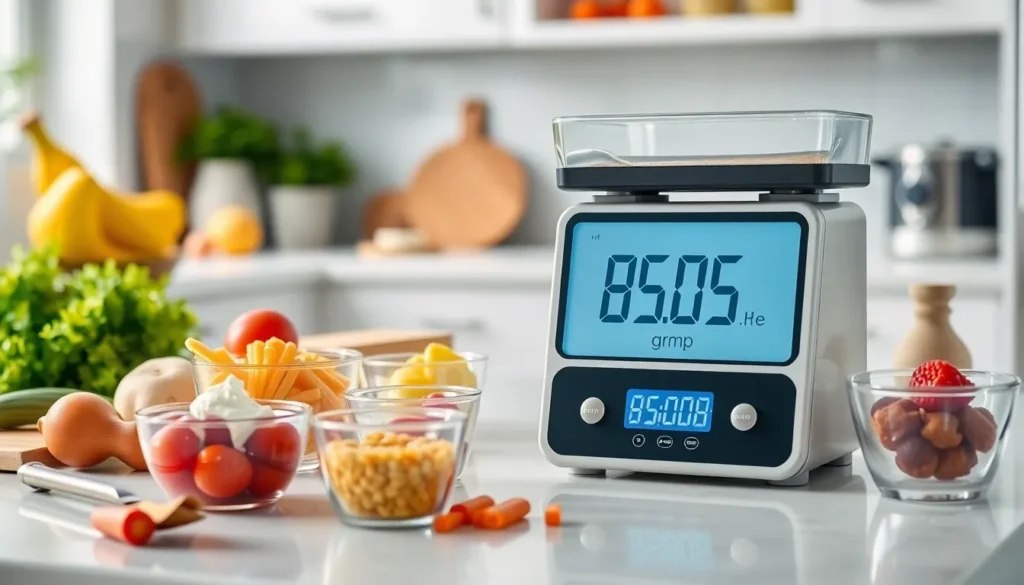
Converting ounces to grams requires a simple formula, as 1 ounce equals approximately 28.35 grams. This ensures accurate measurements for cooking and baking.
The Conversion Formula
The formula for converting ounces to grams is straightforward:
Grams = Ounces × 28.35
To convert 3 ounces to grams, substitute the value into the formula:
Grams = 3 oz × 28.35 = 85.05 grams.
This calculation illustrates how to obtain precise measurements in grams.
Example Calculations
For various conversions, the following examples demonstrate the process:
| Ounces (oz) | Grams (g) |
|---|---|
| 1 | 28.35 |
| 2 | 56.70 |
| 3 | 85.05 |
| 4 | 113.40 |
| 5 | 141.75 |
These calculations emphasize the conversion accuracy needed in recipes and dietary guidelines.
Practical Implications of the Conversion
Grasping the conversion from ounces to grams fosters better culinary practices and nutritional management. Accurate measurements influence cooking, baking, and diet planning, making the understanding of both systems essential.
Cooking and Baking
Cooking and baking rely heavily on precise measurements for consistent results. Many American recipes specify ingredients in ounces, but these measurements must align with grams when following international recipes or using metric-based scales. One ounce equals approximately 28.35 grams, meaning 3 ounces translates to about 85.05 grams.
For example, when a recipe calls for 6 ounces of flour, this equals roughly 170.1 grams. Understanding these conversions ensures home cooks replicate recipes accurately across diverse culinary traditions. In professional kitchens, precision becomes paramount; even slight measurement errors can alter texture and flavor, proving the significance of mastering both systems.
Dietary Considerations
Dietary planning often requires meticulous tracking of food intake by weight. Nutrition labels usually present ingredient weights in ounces, yet nutritionists favor grams for their precision. Grams allow for easier calculations when determining macronutrients, portion sizes, and serving suggestions.
For instance, knowing that 3 ounces of chicken breast equals approximately 85.05 grams enables dieters to track protein intake more effectively. Using grams also facilitates comparisons between food items, aiding in maintaining healthy dietary choices. Understanding this conversion supports informed decisions that align with individual dietary goals, ultimately enhancing overall health and wellness.
Tools for Conversion
Utilizing effective tools for conversion simplifies the process of translating ounces to grams. These tools range from charts to online calculators, providing accuracy and convenience for cooks and nutritionists alike.
Conversion Charts
Conversion charts facilitate quick reference for standard measurements. They typically display common ounce-to-gram conversions, enabling users to make swift calculations without complex formulas. For example, a chart might show that:
| Ounces (oz) | Grams (g) |
|---|---|
| 1 | 28.35 |
| 2 | 56.70 |
| 3 | 85.05 |
| 4 | 113.40 |
| 5 | 141.75 |
| 6 | 170.10 |
Conversion charts are especially useful in kitchens where consistent measurements are essential, allowing cooks to ensure accuracy across multiple recipes.
Online Calculators
Online calculators streamline the conversion process, offering instant results with user-friendly interfaces. Users can input any ounce value, and the calculator returns the equivalent in grams within seconds. These calculators reduce the risk of error associated with manual calculations, making them ideal for those unfamiliar with weight conversions. Many nutrition websites and mobile apps also provide these tools, integrating them into meal planning and dietary tracking functionalities.
Mastering the conversion from ounces to grams is essential for anyone looking to enhance their cooking and baking skills. With precise measurements, chefs can replicate recipes accurately and ensure consistent results. Understanding these conversions also supports better dietary planning, allowing individuals to track their food intake effectively.
Utilizing tools like conversion charts and online calculators simplifies the process, making it easier to navigate between measurement systems. By grasping the relationship between ounces and grams, cooks can confidently explore diverse culinary traditions and maintain a balanced diet. Embracing this knowledge ultimately leads to improved culinary practices and healthier lifestyle choices.